What Changes When We Take Movement Outside
Why spring play quietly accelerates development in ways indoor spaces can’t

After a long winter, we all feel it: the pull to go outside, the need for fresh air, the shift in energy. For children, this transition is not just emotional; it’s developmental. When movement shifts outdoors, everything changes.
Indoors, movement is contained. Surfaces are flat. The environment is predictable. Variation is limited. Outside, movement is dynamic. The ground is uneven, the space open. The environment invites, rather than directs, exploration. Children don’t just move more outside; they move differently.
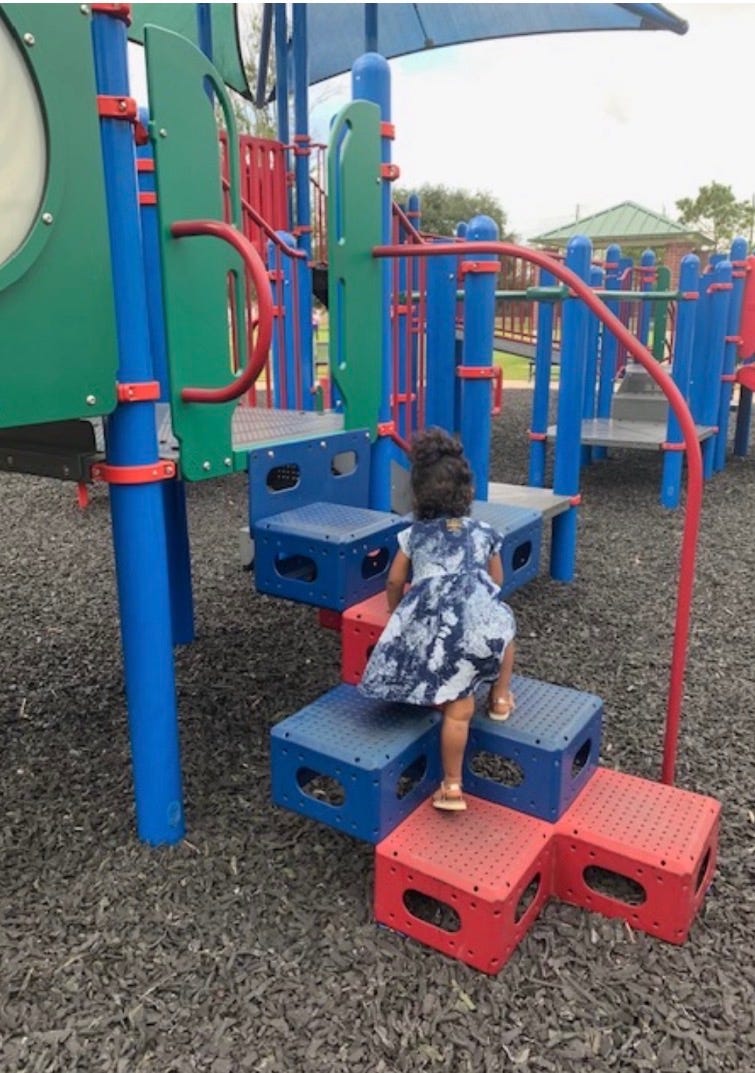
At the park, a simple walk becomes navigating unpredictable surfaces that demand constant adjustment. These moments seem small, but they build coordination, balance, and strength. A child who stayed indoors must now problem-solve: What happens if I try this? Where do I shift my weight? Where do I place my foot? That variability drives development forward.
Strength develops in more meaningful ways. We often see strengthening as something that requires direct effort, but in the outside world, strength builds naturally through play. Climbing a ladder builds coordination and upper-body strength. Squatting in sand supports hip stability. Pulling up on playground structures activates the core in lasting, functional ways. Drills are unnecessary when movement has purpose.
The sensory experience of being outdoors adds another important layer. The feel of grass under feet or hands, the resistance of sand, the sound and feel of wind, and the visual depth of open space all help a child organize their body and attention. We often notice that children are more regulated, more focused, and more engaged when they are outside.
The park also provides just enough challenge to support confidence. A step that feels slightly too high or a surface that feels a bit unsteady creates opportunities for children to try, adjust, and succeed. A climb that requires a second attempt does the same. These small moments begin to build an internal belief that they can figure things out. That confidence carries into every other area of development.
There is nothing extra you need to add this spring. You do not need a plan, special equipment, or a structured activity. Your role is to create the opportunity, provide a safe space, and be inquisitive. Notice what your child is drawn to, where they hesitate, and what they try again. Development is happening in those moments.
As everything around us grows again, our children do too. Sometimes, all they need is space to move through it—and our steady support as they find their way.
💛 From confusion to confidence—one movement at a time.
If you’ve wondered if what you’re seeing is typical or how to support your child with confidence, you’re not alone. That’s why I created Motor Skills Matter—to turn confusion into confidence through meaningful movement.
I offer in-home and virtual baby wellness programs to support practical development. To learn more, visit my website for program options.
Subscribe now for weekly tips and practical strategies to support your child’s development through play. Sign up on my website to start receiving monthly insights directly to your inbox
.
Yes!! although it’s still a bit cold here in Toronto…I always encourage my girls to always go to the parks…so they can jump around and let them take risks in some of them! (I have to take a deep breath for sure…;)) but I know it gives them sooo much confidence! and Tara advocates, motor skills!!